

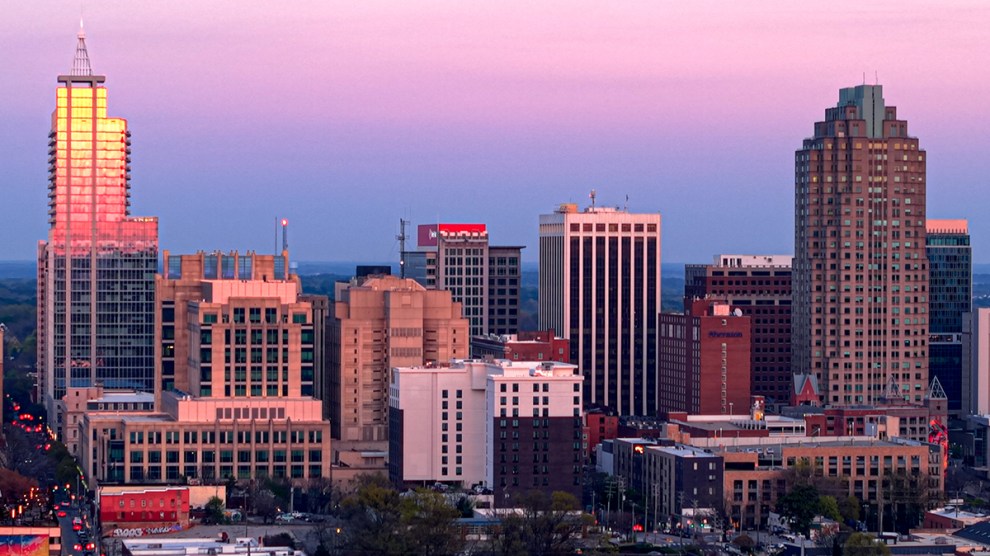
Read the latest Yardi Matrix Raleigh Multifamily Market Report.
Robust Supply Tempers Fundamentals
In early 2025, Raleigh–Durham’s multifamily market displayed an uneven performance amid robust new supply. Average advertised asking rents were up 0.5%, on a trailing three-month basis, as of April. However, year-over-year, the average dropped 0.6% to $1,557, while the national figure recorded a 0.9% increase to $1,736. The metro’s occupancy rate slid to 93.5%, below the national average of 94.4%, as of March, as noted in the U.S. multifamily report.
As of February, the unemployment rate was 3.1% in Durham– Chapel Hill and slightly lower in Raleigh–Cary, at 3.0%, according to data from the Bureau of Labor Statistics. Both were well below the national average of 4.1%. The metro gained 18,800 net jobs in the 12 months ending in February. The Research Triangle continues to attract companies. Genetech announced plans for a $700 million manufacturing facility at the same hub in Holly Springs, N.C., while Amgen has already invested $1.5 billion to grow its drug manufacturing capabilities. Nearby, FUJIFILM Diosynth Biotechnologies will start manufacturing biologic medicines for Regeneron Pharmaceuticals under a $3 billion agreement. The new Holly Springs facility is expected to come online later this year.
Year-to-date through April, Raleigh–Durham added 3,851 units or 1.9% of existing stock, outpacing the U.S. by 110 basis points. Multifamily sales totaled $345 million, continuing a downward trend in both volume and number of transactions since the 2021 peak.
Read the full Yardi Matrix Raleigh Multifamily Market Report: June 2025

Add Comment