





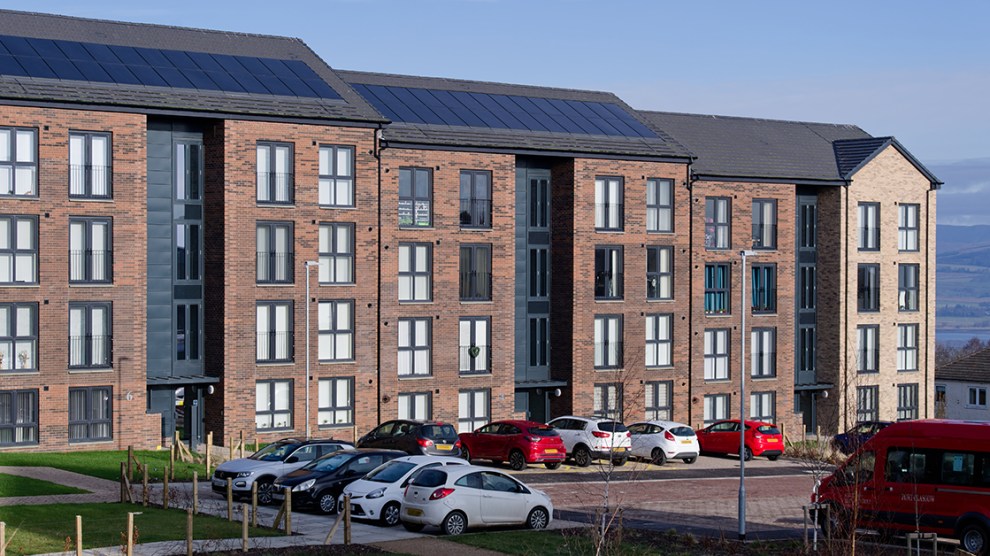
Understanding when affordable housing competes with market-rate properties is just the first step.
Highlights:
- Competition occurs when market-rate property rents are within 15% of affordable housing rates.
- High-cost markets around the coasts feature little-to-no rental overlap.
- New deliveries and inventory vintage cause more competition, but with different implications.
Competition exhibits vast market-level variance
The rental overlap between affordable housing and market-rate properties varies vastly between markets. While a previous Yardi Matrix report analyzed this phenomenon from the standpoint of area median income thresholds, this study proposes a new approach. Competition between conventional and income-restricted properties occurs when the average rent between market-rate properties is within 15 percent of their income-restricted counterparts, except for California, where the figure is 10 percent. The study revealed that the high costs of coastal markets, supply, vintage and composition can affect the overlap.
With overall pricing establishing a baseline for competition, high-cost markets throughout the coasts stand out due to their elevated rents. One example is Boston, a metro where the average advertised conventional rent stood at roughly $2,900 in July, more than $1,000 above the market’s affordable rent for that month. With limited competition, demand for income-restricted housing was strong as Boston’s occupancy clocked in at 97.3% in July. These metros also feature a stock disproportionally tilted toward high-end discretionary and upper mid-range properties, further fueling the lack of competition.
Supply and vintage both have a similar effect, though different implications. Strong deliveries can put downward pressure on average rents, resulting in a higher overlap between affordable and market-rate rents. Austin is a clear example, a market where 73% of conventional stock competed against income-restricted properties in July. Yet, markets with a high share of aging properties also exhibit this competitive behavior. In Detroit, a metro where nearly 80% of inventory is made up of workforce and low- to mid-range properties, 56 percent of market stock vied with affordable communities.
How new supply and age affect affordable housing development and investment
Understanding what drives competition takes center stage, as an age-driven overlap may provide an edge for new affordable stock that relies on quality, energy efficiency and long-term affordability, over older conventional properties that could have fewer amenities and may require maintenance. Supply-enhanced competition places greater emphasis on location, quality and operating performance as demand shifts, but does not diminish. Competition can inform investment decision-making as well, since knowing when to preserve, rehabilitate, or redevelop can turn into a key insight. Markets with little-to-no competition may be more suited toward preservation, while metros with vintage-driven competition present a redevelopment and rehabilitation opportunity, in addition to preservation.
While traditional measures such as household income, cost burden, demographic growth and availability of subsidized housing remain fundamental to affordable housing planning, they do not capture how market-rate properties affect income-restricted performance. As affordable housing resources turn increasingly constrained, understanding the mechanics that drive this competitive ecosystem can help developers, investors and policymakers by informing decision-making regarding underwriting, construction frameworks and capital allocation.
Read the full Yardi Matrix Affordable Housing National Market Report: August 2026.





Add Comment