




Rent growth posts minor increase month-over-month in February, according to Yardi Matrix’s latest national multifamily market report.
Report highlights:
- U.S. multifamily advertised asking rents gained $1 to $1,751 in February, up 1.2% year-over-year.
- Rent growth was sustained by the Renter-by-Necessity segment, Lifestyle was flat.
- Supply will moderate as construction starts dropped in 2024. Rent growth in 2025 is primarily conditioned by the durability of demand in absorbing last year’s inflow of deliveries.
- Advertised asking rents in the single-family build-to-rent market inched up 0.2% year-over-year through February to $2,165.
Rent growth steady at the end tail of the slow season
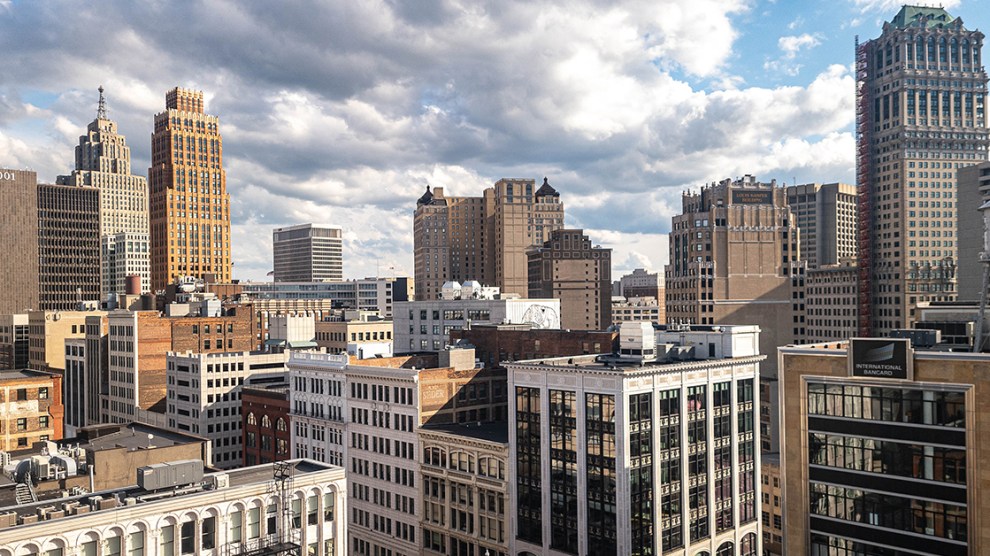
The average U.S. advertised asking rent rose 1.2% year-over-year in February, up by $1 to $1,751. The regional variance persisted, with higher rent growth in metros in the Midwest and Northeast, led by New York (5.6%), Kansas City (4.1%), Columbus (3.8%), Chicago (3.6%) and Detroit (3.5%). High-supply metros in the Sun Belt continued to record declines in average rents, with the largest drops posted by Austin (-5.1%), Denver (-3.1%) and Phoenix (-2.2%).
On a month-over-month basis, advertised asking rents inched up 0.1%, declining in 10 of the top 30 metros. Growth was sustained solely by the Renter-by-Necessity segment, while Lifestyle rents remained unchanged. New York registered the largest increase in short-term rents, rising 0.9% overall, and by 1.1% in Lifestyle and 0.5% in RBN. Columbus was next, with rents gaining 0.5% month-over-month, up by 0.1% in Lifestyle and 0.6% in RBN. In markets with substantial deliveries, absorption is sluggish, keeping rent growth negative. In Austin, rents fell 0.4% month-over-month (-0.4% in Lifestyle and -0.5% in RBN), as of the 27,000 units delivered over the past year, only 10,000 were absorbed. Denver rents fell 0.5% overall, by -0.4% in Lifestyle and -0.5% in RBN, and had only 5,500 units absorbed of 19,000 delivered.
The national occupancy rate remained unchanged in February at 94.5%, as metros with completions as a percentage of total stock above 4.0%, led to declines of up to 0.9% in Denver, followed by Nashville (-0.5%), Dallas, Phoenix and Orlando (all -0.4%). Few markets recorded minor gains in occupancy, led by San Francisco, Las Vegas and Baltimore (all 0.3%).
Demand durability test ahead
Seasonally, rent growth picks up in March, and this year has its own challenges. Absorption of 2024’s deliveries is one, as last year holds the highest number in decades. Another set of trials stems from the policies brought on by the new administration on the economy.
In 2024, supply growth controlled multifamily rent performance, and in 2025 the pace of absorption will take the reins. Matrix registered more than 500,000 units absorbed nationally in 2024, including affordable housing and single-family rental build-to-rent properties, and 613,000 units delivered. Supply growth is slowing as multifamily construction starts dropped to 363,000 units in 2024, and Matrix forecasts deliveries will total 525,000 units in 2025 and 414,000 units in 2026.
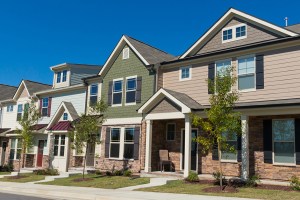
Advertised asking rents in the single-family build-to-rent sector remained flat at $2,165 in February, up 0.2% year-over-year. SFR occupancy fell 0.7% year-over-year to 94.7% in February. SFR supply is also moderating, but slower than multifamily. Matrix forecasts BTR single-family completions to fall 6% in 2025 compared to last year, while multifamily deliveries are anticipated to drop 14%. BTR is forecast to comprise 6.3% of multifamily completions in 2025, and 6.8% in 2026. Metros anticipated to lead in BTR deliveries over the next two years are Phoenix (8,670 units), Dallas (6,422 units), Atlanta (5,135 units), Austin (2,940 units) and Charlotte (2,798 units).
Read the full Yardi Matrix Multifamily National Market Report: February 2025.




Add Comment