





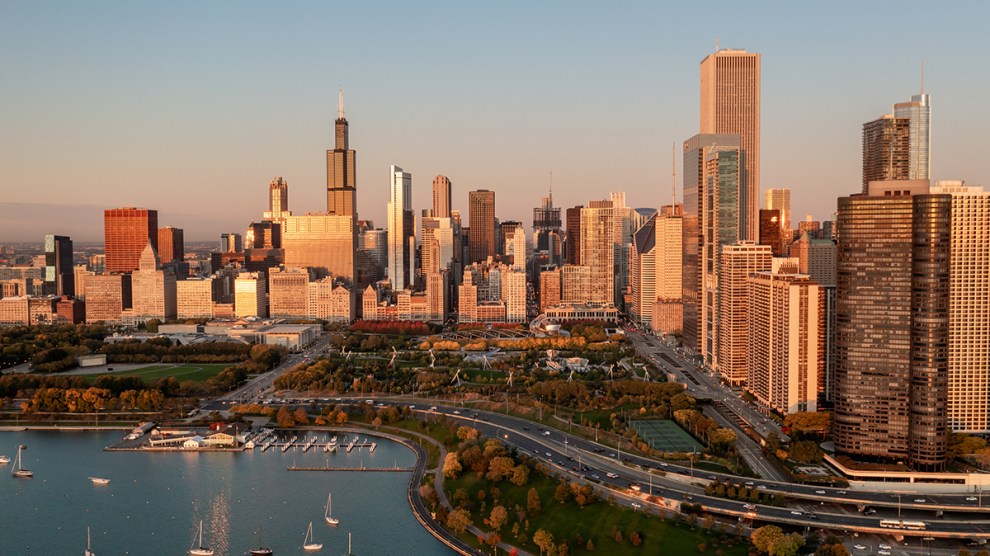
Strong Fundamentals Amid Economic Softness
Chicago’s average advertised asking rents were up 0.4%, on a trailing three-month basis through July, to $2,100, outpacing the national figure by 20 basis points. At 2.7% on a year-over-year basis, local rent growth was behind only San Francisco, New York City and Kansas City among the major metros tracked by Yardi Matrix. The metro’s occupancy rate in stabilized assets settled at 95.9%, 180 basis points above the national average, as noted in the U.S. multifamily market report.
Economic conditions were more moderate, however, with Chicago’s unemployment rate at 5.3% as of June, according to preliminary Bureau of Labor Statistics data. The metro lost 900 net jobs during the 12 months ending in May, even as four sectors, led by education and health services, added a combined 35,300 jobs. One of the projects strengthening the economy is a $7 billion megaproject, which will reshape the area around the United Center in the Near West Side. The first phase of the 1901 Project, including a 6,000-seat music hall is expected to come online in 2028.
Chicago gained more than 2,300 units during the first seven months of the year. The metro had a robust pipeline with some 11,600 units underway and 84,000 in the planning and permitting stages. Investor activity picked up, with multifamily sales totaling $2.8 billion year-to-date through July. If the trend holds, transaction volume could surpass the $4 billion total recorded in 2025.
Read the full Yardi Matrix Chicago Multifamily Market Report: September 2026



Add Comment