


Market Holds Despite Elevated Deliveries
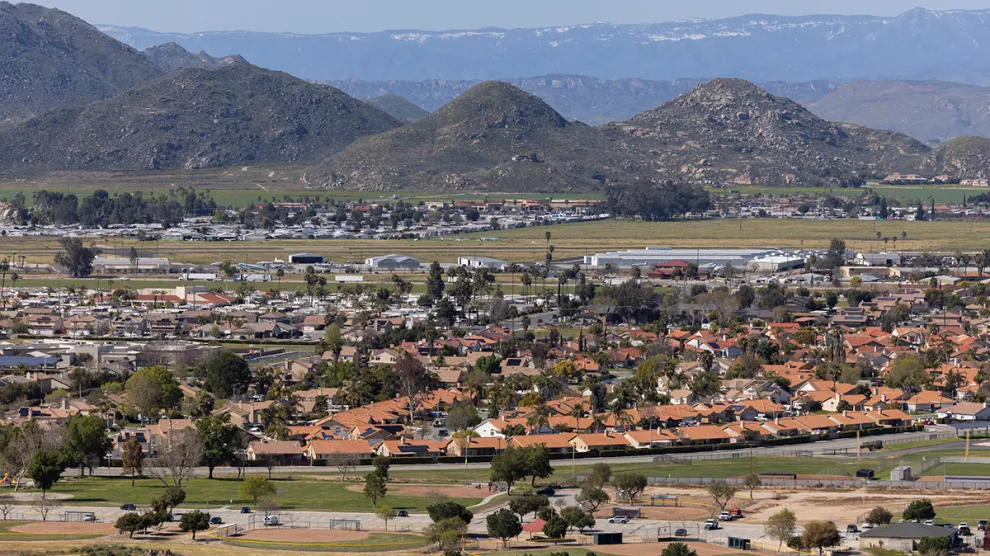
Fundamentals in the Inland Empire remained steady but supply sensitive, with modest rent growth and limited occupancy contraction despite a recent delivery wave. Average advertised asking rents rose 0.2% on a trailing three-month basis through June, to $2,186, matching the national increase to $1,763, as per the U.S. multifamily market report. Year-over-year, rents advanced 0.5%, outpacing the 0.2% U.S. gain, while the occupancy rate in stabilized properties slipped 20 basis points to, 95.2%.
Employment growth outperformed the U.S. average, but the margin narrowed, with the metro up 0.3% year-over-year as of April, while the U.S. contracted 0.1%. The unemployment rate stood at 4.6% in May, below California’s 5.3% but above the 4.3% U.S. average. A net gain of just 100 jobs in the 12 months ending in April reflected strong growth in education and health services, offset by losses across seven sectors led by professional and business services. Notable CRE drivers include Riverside Community Hospital’s 342,690-square-foot Tower H and Union Pacific’s planned West Colton and intermodal infrastructure upgrades.
Supply pressure moderated in the first half of 2026, with 1,412 units delivered through June and 6,253 units underway, even as starts dropped 90.3% year-over-year. Investment activity stayed modest, with $121.2 million in assets trading through June, while the average price per unit fell 24.7% year-to-date to $200,695, but remained 8.7% above the $184,594 U.S. average.
Read the full Yardi Matrix Inland Empire Multifamily Market Report: August 2026


Add Comment