


How we compare
Yardi Matrix was built and designed to produce the most complete and actionable market intelligence available to the institutional real estate industry.
Where conventional database providers deliver raw data and leave analysis to you, Yardi Matrix functions as an in-house research department, providing the local market knowledge typically attributed only to on-the-ground experts, combined with the scale and speed of a continuously updated national platform.
Customizable searches and outputs
Where competitive services function solely as data suppliers, Yardi Matrix combines information into a single platform. Distinguished not just by what data it contains, but by how that data is delivered and applied.
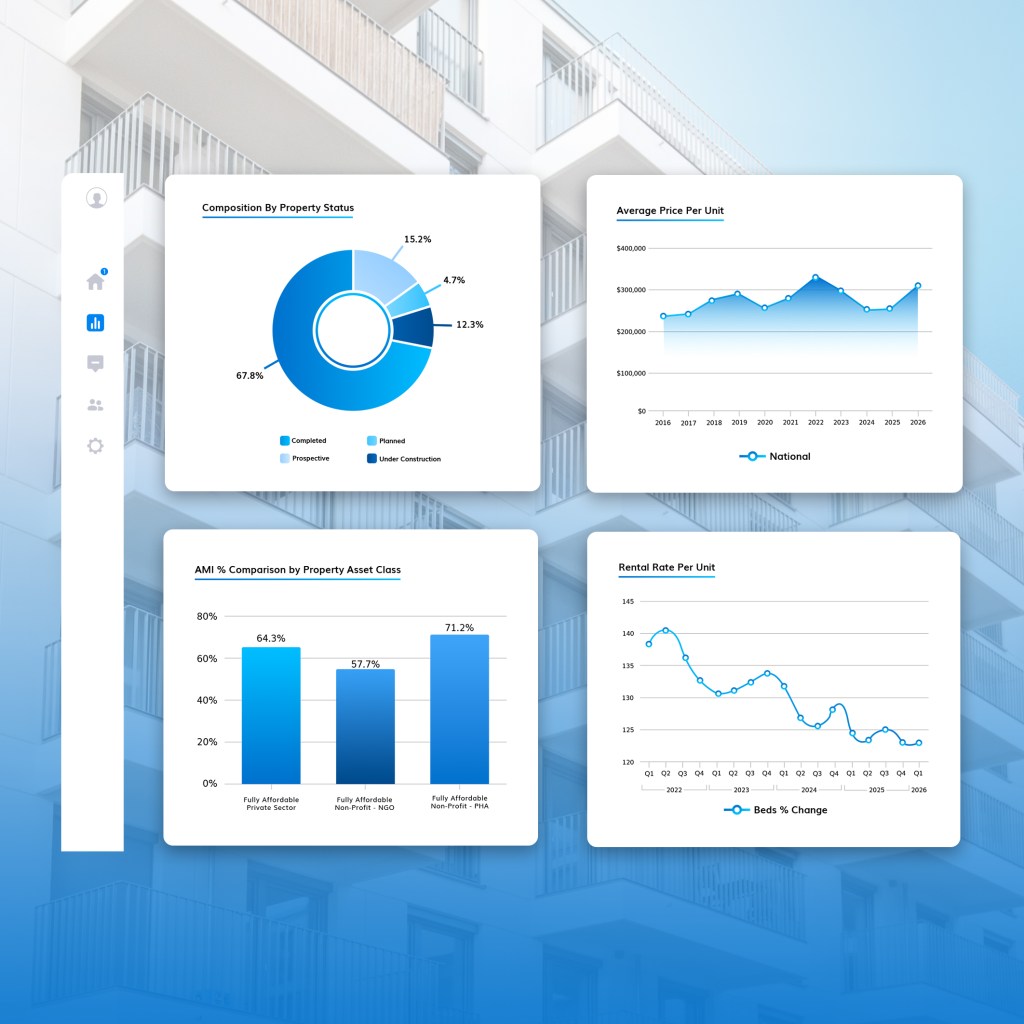
Competitive information sources are rigidly defined treating data as the end product allowing users to apply to their portfolio accordingly.
Yardi Matrix is built around user needs and requests. The platform is dynamic and flexible, allowing subscribers to cut directly to the information required for a report or property evaluation, without the labor cost of sorting through raw data sources. If you need a custom, report, just ask.
Yardi Matrix’s embedded functionality incorporates the patented property and location rating system the industry’s only standardized rating model. Properties are evaluated across a graded index for both improvements and location, enabling apples-to-apples comparisons that would otherwise require an extensive manual process to complete.
There is no stronger platform for business development
We invite direct comparison with any other real estate information source.
Characteristics defining the Yardi Matrix service
Yardi Matrix delivers the commercial real estate industry’s most robust reporting. Continuous product improvement is a core commitment—driven by the expectation that as subscribers gain access to more functionality, their standards for what the platform delivers will rise accordingly.
On-demand information delivery
Complete property-level information on all multifamily properties of 50 or more units is available on demand, in the format needed. Rental market, development and investor market conditions are reported in near real-time, with time-sensitive data updated on a continuous basis to maintain a constantly refreshed information base.
Continuous updates
New development, sales activity, management changes, rental rates and concessions are updated on a continuous basis. All data is scrubbed before entry. Single-asset entity ownership structures are pierced to identify actual owners and make contact information available. Sales, ownership and new development records are independently confirmed for accuracy.
Patented property and location rating system
Yardi Matrix’s patented property and location rating system enables like-for-like comparison of property types in an instantly searchable format. No other standardized, objective rating system exists in the commercial real estate industry. Manual data selection is eliminated, and reports that once required hours or days to produce are completed in minutes.
Rental rate methodology
Rental rates are surveyed by telephone, with researchers soliciting information as prospective renters. Current street rents are reported as both actual and market rents. Market rents are normalized to an apples-to-apples format, accounting for factors that affect the true base rent — including utility billing structures, RUBS arrangements and other concession.
Largest refined database
Yardi Matrix maintains the largest and most complete refined property database in the industry, covering every multifamily asset of 50 or more units within its market areas—representing approximately 80% of the U.S. population, including 127,757 properties and 23.8 million units.
Dynamic data access
Subscribers define which information is relevant to their need, how it should be summarized and how far to drill down — filtering only what matters and eliminating everything that does not.
Universal Access
The platform is available from any internet connection, at any hour, every day of the week.
Characteristics defining competitive information sources
Batch, delayed Information
Competitive services typically publish data thirty days after quarter-end, reflecting a single point in time. That information begins deteriorating the day it is published and continues to lose accuracy over the ninety days until the next update.
Non-standardized data
Competitive information is non-standardized, limiting analysis to basic filters such as zip code, property size or age. Without a common rating framework, properties of similar type cannot be meaningfully compared.
Incomplete property-level coverage
Competitive services provide market-level overviews based on samples, with limited or no individual property-level detail.
Raw and unrefined ownership data
Competitive sources list owners as single-asset entities—LLCs, limited partnerships or trusts—without piercing those structures to identify actual owners or provide usable contact information.
Limited and inconsistent rental data
Competitive suppliers collect rental data as a research company, accepting what property management chooses to report. Rents are provided as averages, with no adjustment for factors that affect true base rent—such as centrally metered utilities, RUBS billing or other concessions.